


Of all the cities targeted by Texas that took in large numbers of migrants over the past two years, the Times analysis showed, Denver appeared to have the highest portion arriving on Abbott buses.
(On the low end was Los Angeles, where very few new migrants arrived on a Texas-chartered bus.)
At first, Denver offered several weeks of free shelter to newly arrived migrants. But after the number of people in shelters grew to 10 times their average level before the migrant surge, reaching nearly 5,000 in January, officials said, the city began offering only 72 hours of free housing. City officials began advising incoming migrants to continue on to somewhere else.
“There is no shelter in Denver,” the signs now read in Spanish inside the city’s main migrant intake center.
Yet the buses keep coming.
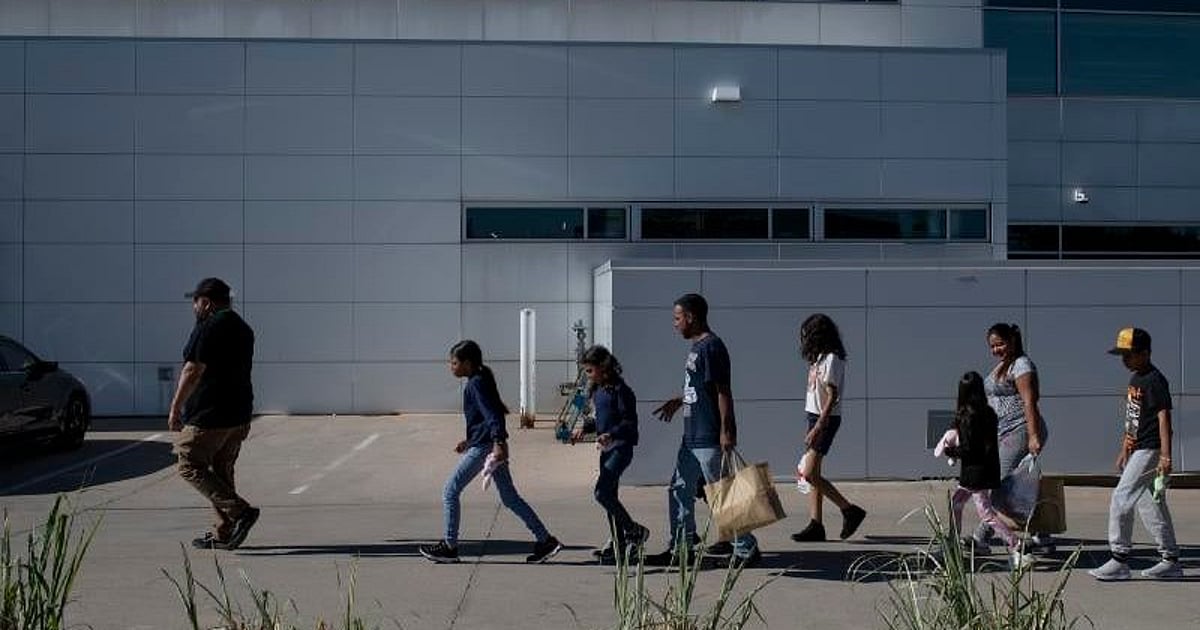
At 11:48 p.m. on a June weeknight, a white bus with Texas plates pulled up to a Denver hotel that has served as a way station for newly arriving migrants.
Jhogelvis Salazar, a migrant from Venezuela, stepped off along with 30 others. He had never heard of Denver before agreeing to take a free bus trip there from El Paso, Texas.
At the intake center the next morning, he was told that Denver was out of money for migrant shelter, that jobs were scarce, and that he and the others would be better off somewhere else.
He stood for several minutes looking at a map of the United States. A nonprofit worker suggested that the Pacific Northwest might be a good destination, and he decided to take a bus to Portland, Oregon. The city of Denver, he was told, would pick up the fare.
Angreylis Bolivar, a 27-year-old asylum-seeker from Maracaibo, Venezuela, who arrived in Denver on a Texas bus last fall, opted to stay in the Colorado capital. But it has been rough going.
She lives in a small apartment east of downtown in a complex that houses more than 100 other recent migrants, most of them from Venezuela. Her husband found work in construction, she said, but it has been hard to pay the $1,300 rent. “Lots of competition,” she said, with so many migrants. She said many newcomers have left.
City officials confirmed as much: About half of the 42,000 migrants who have passed through the city’s intake system have since moved on.
At one point, projected spending on services for migrants reached $180 million for 2024 — about 10 per cent of the budget. City officials warned of cuts to city services. The reduced amount of time offered to shelter migrants has since brought down the projected cost.
“I think it has changed the city,” said Denver’s mayor, Johnston , who said it had forced officials to think about immigration in ways they had not before.
Denver now has a program of classes, training and assistance meant to help asylum-seekers prepare for the time — usually several months after arrival — when they are granted work permits. For those who have no hope of getting a work permit anytime soon, he said, the city extended its offer of paid housing to six months.
He said he hoped Denver’s approach would provide a model to other cities for how to be more welcoming. But he acknowledged that a renewed surge in arrivals would probably overwhelm the new system.
Johnston said he has tried to speak with Abbott about the buses. But the governor is not taking his calls.
link