
Arizona school budget cuts impact Dysart bus service
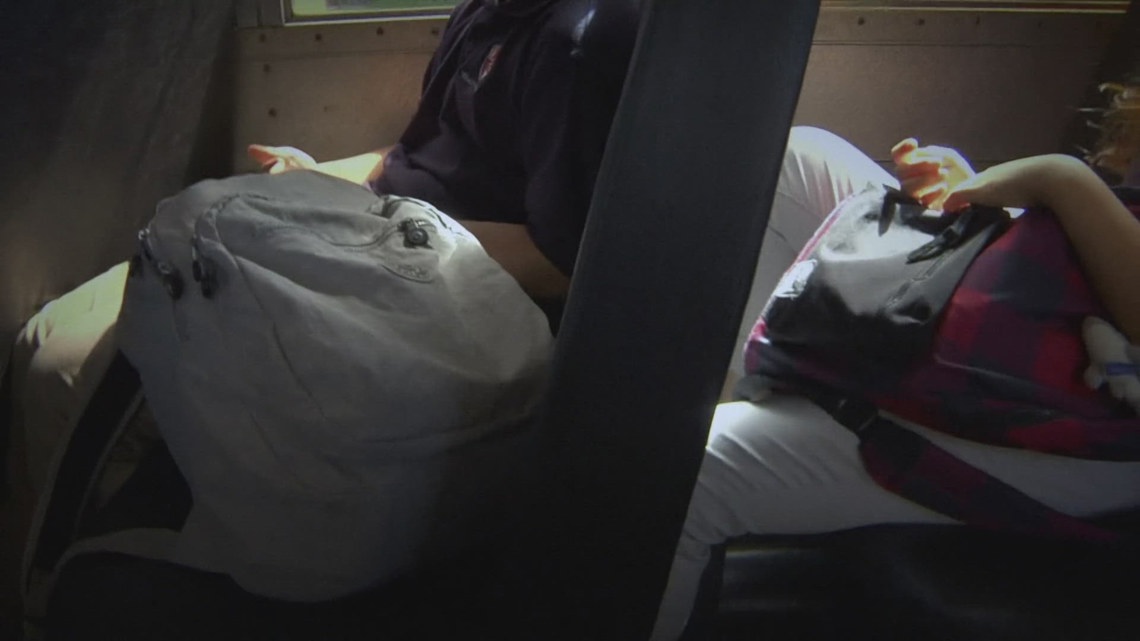
The Dysart Unified School District recently announced that several hundred students will lose their school bus routes beginning next school year.
PHOENIX — During a time when Arizona public schools are not getting funds to meet rising operating costs, even the bus service is no longer a guarantee.
The Dysart Unified School District recently announced that several hundred students will lose their school bus routes beginning next school year after the board made a cost-cutting move that is expected to save about half a million dollars annually.
Transportation remains one of the steepest challenges for Arizona school districts, and the move at Dysart reveals the desperation for one large district to make its budget.
State “shortchanged” Dysart $60 Million
The district runs its aging fleet of 91 buses with lean funding. 70% of the buses are at least 15 years old, and they typically have a life span of 20 years. Many should have been replaced years ago, the district says.
“Between 2014 and 2021, Dysart’s Capital funding was shorted over $60 million dollars,” said Dysart spokesperson Renee Ryon. “Several of those years we received only $1.4-1.5 million for the entire year, which has certainly impacted our ability to maintain and replace aging buses and equipment.”
The lack of capital funding by the state legislature is the subject of a current lawsuit by Arizona schools but it has lasted several years without a conclusion. In the meantime, districts are expected to make ends meet with local bonds and overrides, finance officials say. Dysart Unified has been forced to make every dollar count because it has not been able to pass a bond or override since 2006.
“This is a great example of why we’re suing the state,” said Danny Addleman, attorney representing schools. “The state has taken away literally billions in capital funding that our schools should be getting.”
No bus service for K-8 students living 1.5 miles from school
Beginning next year, the district will expand the radius of a “no bus service” zone for K-8 schools from 1 mile to 1.5 miles. For high schools, it expands from 1.5 miles to 2 miles. Students living within those zones will not have a bus stop.
Amanda Rockey, a mother of four, says her 11-year-old daughter is supposed to attend middle school next year but will not be eligible for bus service.
“We’re kind of stuck in a situation where I’m asking, how do we get our kids to school safely in 100-degree-plus heat?” Rockey said. “I weighed my kid’s backpack and it’s fifteen pounds.”
During a recent board meeting, elected leaders said the decision to reduce school bus service was the result of months of planning and not made lightly.
“I’m just very proud of our administration and our district for taking a look at this and taking it seriously. We have to make the most out of what we have,” said Dawn Densmore, Board President.
Board will place bond measure on November ballot
Reduced bus routes also mean some kids would have to cross busy Bell Rd during the late morning rush hour. The district says they will soon provide families information on safe walking and biking routes.
Absent new funding provided by the state legislature, there does not appear to be another solution for Dysart. However, this week the board just approved placing a $127 million bond measure on the November ballot for future funding. It would not result in a tax increase.
“As such, in ‘A’ Rated Dysart, we will continue to share information regarding bond and override elections so that voters can make informed decisions and we will ensure that we are living within our means as we educate our students,” said Superintendent John Croteau in a statement to 12News.
“Children should be a major priority”
Statewide data shows the daunting challenge facing Dysart.
Last year, statewide, the overall average of school districts’ capital fund budget included 44% of local voter-approved measures. That number was as high as 73% in 2018. By contrast, Dysart Unified School District had robust bond and override funds to spend up until 2009. The funds dwindled and by 2012, it had no bond and override funds to spend. That means since 2012, the Dysart district’s capital funding budget is made up of 0% local voter-approved measures.
“Unless the school funding process changes at the state level, districts must continue to bring questions to voters through elections when deemed necessary by the governing board, and make cuts to our budget when needed,” said Croteau.
Two state legislators have the most influence over what kind of priority “additional assistance” funding has in the state budget. House Speaker Steve Montenegro (R) and Senate President Warren Petersen (R). They did not respond to requests for comment.
12News asked Croteau if local state legislators who represent his district’s boundaries have communicated with him about the district’s needs or visited his campuses.
“I welcome anyone that would like to visit our schools and see the needs firsthand to contact us,” Croteau said.
Parent said she researched using an ESA
Rockey said she has researched alternatives for her daughter. She could not find a local charter school that provides transportation (although charter schools receive state funds for the purpose of transportation, most do not provide it.)
Rockey also researched using a state-funded private school voucher, but says the private school nearest to her does not guarantee transportation for all students. Her dilemma reflects another debate statewide.
Though not all private vouchers amount to a new expense for the state, nonpartisan research shows that overall, the state’s ESA voucher program costs Arizona’s general budget hundreds of millions of dollars in new expenses.
Rockey said she wants state leaders to know that convenient bus service is a matter of safety.
“And our children’s safety should be a major priority no matter what,” Rockey said.
>> Download the 12News app for the latest local breaking news straight to your phone.
link