Is Santorini travel safe after the earthquakes? Tourism execs say yes: Travel Weekly
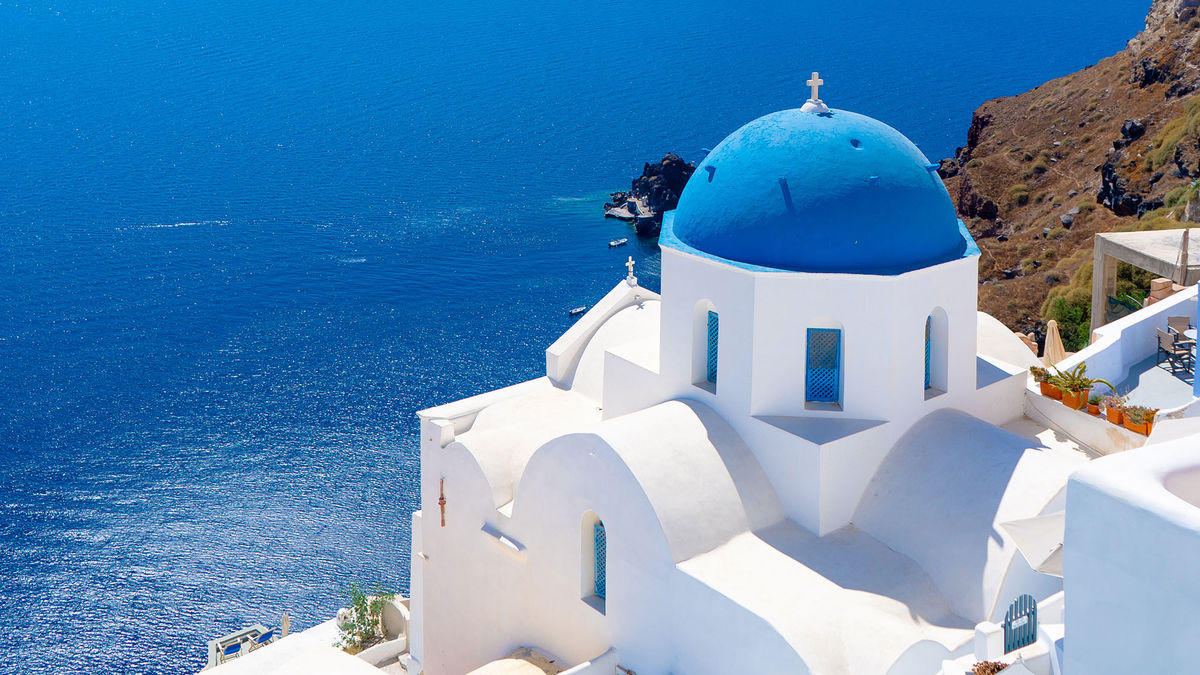
As Santorini ramps up for its high season, tourism stakeholders are working to counter negative press surrounding the seismic activity that disrupted the island earlier this year.
A swarm of small-magnitude earthquakes began in late January and prompted a state of emergency and temporary evacuations on Santorini and nearby islands before easing substantially in recent weeks, local authorities said.
And while no major injuries or damage was reported as a result of the quakes, they did cause a slowdown during a peak booking period for the island.

Markos Chaidemenos
“I like to call the situation a PR disaster, rather than natural disaster,” said Markos Chaidemenos, managing director of Canaves Collection, a luxury hospitality group with four hotels and a villa complex on the island. “The earthquakes have calmed down for some time now, but we still have Santorini being portrayed as a place that was devastated.”
Chaidemenos is among hoteliers and travel advisors who said the fallout dampened future bookings.
“We didn’t have cancellations, but the flow of incoming reservations has decreased,” he said. “January, February and March are big months of incoming reservations for the summer vacation period.”
Tourism officials and hoteliers have raced to reassure travelers that everything is back to normal.
On March 20, Greece’s tourism minister, Olga Kefalogianni, said in a statement there are “no issues with the island’s tourism and essential infrastructure, which are functioning normally.”
The industry has rallied around that message. George Pitsinelis, general manager of the Magma Resort Santorini, part of Hyatt’s Unbound Collection, said “life on the island continues as usual,” with local businesses, including hotels and restaurants, ready to welcome guests. Santorini’s hoteliers, he said, “have implemented regular inspections and structural assessments.”
A major milestone was on March 23, when the island welcomed its first cruise ship of the season, after the quakes forced some ships to cancel Santorini calls.
Pitsinelis said cancellations have been minimal, but some resorts “have noted a slower pace in reservations.”
Still, he is optimistic, saying interest in Santorini is “exceptionally strong,” and he is “confident that 2025 will see guests returning as usual.”
Despite the booking dip, Chaidemenos also believes confidence is returning.
“The pickup is picking up,” he said. “I think we’re going to eventually do great. We’re very optimistic.”
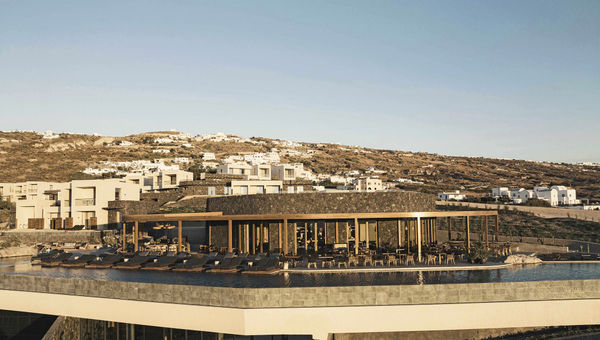
The Magma Resort Santorini, part of Hyatt’s Unbound Collection. Photo Credit: Magma Resort Santorini
Uptick in new bookings
Travel advisors reported that they’ve largely managed to keep existing Santorini business on the books, despite some initial hesitation from clients.
“There were certainly concerns among our guests, but we did not experience any significant cancellations,” said Christos Stergiou, CEO and founder of the luxury travel company TrueTrips. “Instead, many travelers chose to wait and monitor the situation.”
Katie Brown, an Atlanta-based travel advisor with Travelmation, encountered similar responses from her clients with Santorini plans. “People who had already prebooked did reach out about possibly canceling their trips,” she said. “But for most people, I just told them, ‘Hey, let’s see what happens. Don’t make any changes right now.'”

Katie Brown
And as word of Santorini’s return to normalcy spreads, some agencies say new bookings are on the upswing.
TrueTrips’ Stergiou said Santorini booking activity rebounded after a delay. “At this point, demand has returned to normal levels.”
Petros Zissimos, managing director for New York-based Hellenic Holidays, said he began seeing an uptick in Santorini requests in mid-March.
“And the requests that I’ve been getting are for Memorial Day and early June,” he said, adding that this represents a far shorter booking window in comparison to the typical three- to four-month window for U.S. travelers.
He said hotels are helping bolster demand by lowering prices some and putting out nonrefundable packages with offers like “stay three nights, get a fourth free.”
Greek tourism downturn?
Advisors said that Greek tourism overall may see a downturn from record levels in recent years, but not due to seismic concerns.
Travelmation’s Brown said broader economic considerations that affect travel decisions are having an impact.
“Getting to Greece is pretty expensive, and people have been paying more attention to ‘off-the-beaten-path’ European destinations and places where your money might go farther,” she said.
Hellenic Holidays’ Zissimos offered a similar assessment. “The season will be down this year, there’s no doubt about it,” he said, pointing to factors including anxiety related to the U.S. election, inflation, high airfares and pricing volatility.
He added that years of talk about peak-season crowds have dramatically shifted visitation patterns.
“There have been all sorts of pundits saying, ‘Don’t visit Greece in July and August, because it’s super busy,'” he said. “But what’s happened is [tourists have] all decided to go in June and September.”
The result has left the traditional peak months with unexpected availability.
“Hoteliers are now coming back to us and saying, ‘Hey, we really would like to make some sort of effort for July and August,'” he said. “So, they’re offering incentives for people to come, because Greece in July and August is absolutely beautiful.”
link