
Streamlining the Future of Air Travel
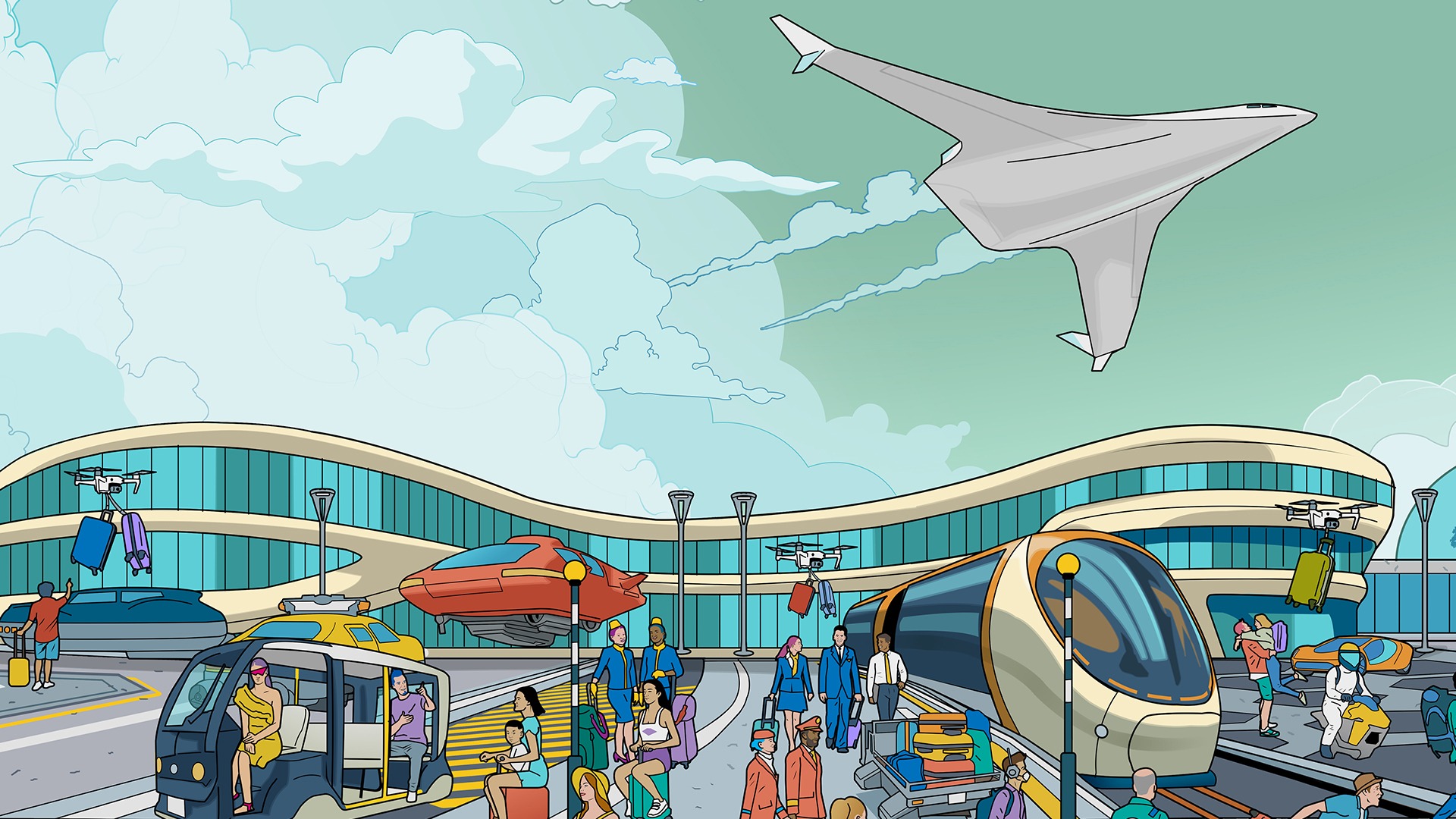
At any time of day, thousands of aircraft buzz through the skies above our heads, ferrying their millions of passengers to every corner of the world. And the numbers are growing sharply. According to Airports Council International, in 2025, nearly 10 billion airline passengers took to the air, a figure predicted to more than double to 23.3 billion by the middle of the century.
All these travelers require larger and more efficient airports. Airport design is an area Populous is now addressing more than ever, following its acquisition of specialist airport designers Fentress Studios.
Curtis Fentress is founder and principal in charge of design at the company. He envisages future airports where passenger engagement is paramount, whether that’s retail, catering, leisure or entertainment.
“Flight delays and cancellations caused by weather, labor shortage, gate allocation delays, ground handling issues, and tight aircraft rotations are routine,” he explains. “How do we take care of passing time for the passenger? In my view, that’s where Populous’ expertise in environmental and experiential design comes in.”
Bruce Miller, global chairman and CEO at Populous, agrees. He sees no reason why large, public entertainment arenas, like The Sphere in Las Vegas—which his company designed—shouldn’t be installed in airports, offering delayed passengers access to movies, concerts or theatrical shows, for example.
“Could you perhaps bring immersive experience elements like that to an airport?” he asks. “Could you bring an interactive art museum to an airport? There are lots of opportunities to make dwell times more entertaining and educational.”
Many existing airports have already become destinations in their own right. Singapore Changi Airport, for example, offers a nature-themed entertainment and retail complex called Jewel which includes gardens, visitor attractions, a hotel, retail, dining and the world’s tallest indoor waterfall—all spread out across 1.46 million square feet (136,000 square meters) of floor space. Hamad International Airport, in Qatar, has capitalised on its location as a major transit hub, halfway between Europe and the Far East. Thanks to facilities such as a 65,000 square foot (6,000 square meter) tropical garden, a wellbeing and fitness centre, a Middle Eastern-style souk and a mosque, it was voted world’s best airport by airline consultancy Skytrax.
Like Changi and Hamad, many of the world’s top airports are now attempting to revive the lost glamor of international travel. Drawing passengers in are high-end restaurants designed by world-famous chefs, premium-class lounges with facilities such as saunas, spas, gyms and sleeping areas, and fashion and beauty retail outlets to rival some of the best-known shopping avenues in major world cities; all very attractive and convenient for passengers from regions where such facilities are rare.
link